← Home · Foundations

Shallow Foundation Design in Trenton NJ — IBC-Compliant Bearing Analysis

Together, we solve the challenges of tomorrow.

LEARN MORE →

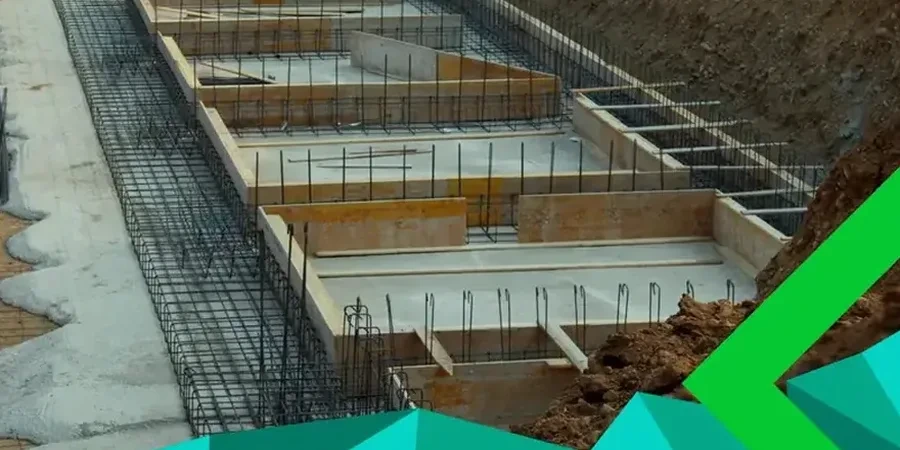
A four-story mixed-use project on South Broad Street hit refusal at 18 feet. The contractor wanted to switch to a shallow foundation system. We ran the numbers. The dense glacial till at that depth gave a net allowable bearing pressure of 6,000 psf — enough for spread footings if we widened the base and accounted for eccentricity from the retaining wall surcharge. That kind of call requires knowing the local stratigraphy cold. Trenton sits on the Fall Line. North of the city you get hard crystalline bedrock at shallow depth. South and along the Delaware River floodplain you hit compressible silts and organic lenses. A shallow foundation design here cannot rely on a textbook profile. We correlate SPT N-values from spt-drilling with laboratory grain-size data to build a site-specific bearing model that works with the real soil — not an idealized one.

A bearing capacity value is only as reliable as the stratigraphic model behind it — and in Trenton, that model changes block by block.

Process and scope

We see too many cases where a geotechnical report assumes homogeneous soil and misses a thin compressible layer at 6 feet. In Trenton that layer is often a silty clay from the Pensauken Formation. Miss it and you get differential settlement that cracks partition walls within the first year. Our shallow foundation design workflow starts with a detailed stratigraphic model. We log every split-spoon sample. We run Atterberg limits on cohesive layers to confirm plasticity and consolidation potential. Then we compute bearing capacity using the general shear equation with shape, depth, and inclination factors per IBC Section 1806 and ASCE 7 Chapter 12. Settlement is checked using Schmertmann's method for sands and Janbu's tangent modulus for clays. For sites near the river where liquefaction is a concern, we integrate liquefaction analysis directly into the foundation recommendation — because a bearing capacity number means nothing if the soil loses strength during a 2,475-year seismic event. Every calculation is documented with the input parameters, so the structural engineer can verify and the building official can sign off without RFIs.
Shallow Foundation Design in Trenton NJ — IBC-Compliant Bearing Analysis
Technical reference image — Trenton New Jersey

Local ground factors

Trenton's population of roughly 90,000 lives on geology that shifts radically within half a mile. The city straddles the boundary between the Piedmont and the Coastal Plain. That means a site on the east side can have 40 feet of compressible alluvium while a site on the west side hits bedrock at 10 feet. The biggest risk with shallow foundations here is not bearing failure — it's differential settlement across a single building footprint. We've seen it happen where one corner sits on dense till and the opposite corner bears on a buried paleochannel filled with soft organic silt. The structure tilts. The plumbing separates. The repair costs exceed the original foundation budget. A second risk is scour. Any shallow foundation within 200 feet of the Delaware River or Assunpink Creek must be analyzed for scour depth during the 100-year flood. IBC 1805.3 requires that footings be placed below the computed scour elevation, which can push embedment depths well past the standard 36-inch frost requirement. Ignore it and you lose the foundation in a major storm event.

Need a geotechnical assessment?

Reply within 24h.

Email: info@geotechnicalengineering1.sbs

Video resource

Typical values

ParameterTypical value
Minimum SPT N-value for shallow bearing≥ 8 blows/foot (cohesionless), ≥ 4 (cohesive)
Footing embedment depth (frost)36 inches minimum per IBC 1809.5
Maximum allowable settlement (total)1 inch for isolated footings on sand
Differential settlement limit1/2 inch over 30 feet span
Factor of safety (bearing)3.0 minimum per IBC 1806.1
Design groundwater assumptionHydrostatic at 5 feet below grade (river-adjacent sites)
Seismic site class range (Trenton metro)C to D per ASCE 7-22 Chapter 20

Complementary services

01

Bearing Capacity and Settlement Analysis

Full analytical computation of net allowable bearing pressure under vertical, lateral, and moment loading. Includes immediate settlement and consolidation settlement predictions with time-rate curves when cohesive layers are present. Delivered as a sealed calculation package.

02

Foundation Subgrade Preparation and Inspection

On-site verification of bearing stratum during excavation. We perform proof-rolling observation, dynamic cone penetrometer checks, and nuclear density testing on compacted fill. Written confirmation letter for the building department prior to steel placement.

Regulatory framework

IBC 2021 Chapter 18 — Soils and Foundations, ASCE 7-22 — Minimum Design Loads for Buildings and Other Structures, ASTM D1586 — Standard Test Method for SPT and Split-Barrel Sampling, ASTM D2487 — Classification of Soils for Engineering Purposes (USCS), ACI 318-19 Chapter 13 — Foundation Design

Common questions

What does a shallow foundation design package cost for a typical Trenton residential addition?

For a single-family addition or small commercial project with standard soil conditions, our design package generally falls in the US$2,090 to US$3,350 range. This includes the site investigation data review, bearing capacity calculations, settlement analysis, and the sealed recommendation letter. Projects requiring multiple borings, liquefaction assessment, or scour analysis fall on the higher end.

How deep do footings need to be in Trenton to meet code?

IBC 1809.5 requires a minimum 36-inch embedment for frost protection. However, sites near the Delaware River or Assunpink Creek may require deeper embedment due to scour. The final depth is set by the deeper of the frost depth, the scour depth, and the depth needed to reach competent bearing material.

Can you design a shallow foundation if the soil report shows soft clay at 5 feet?

It depends on the clay thickness and consistency. If the soft layer is thin — less than 2 to 3 feet — we can sometimes bridge it with a widened footing or a compacted crushed stone replacement. We check punching shear through the competent crust and consolidation settlement of the underlying clay. If the numbers work with a factor of safety of 3, shallow is still viable.

What is the difference between allowable bearing pressure and ultimate bearing capacity?

Ultimate bearing capacity is the theoretical pressure that causes shear failure in the soil. Allowable bearing pressure is the ultimate value divided by a factor of safety — typically 3.0 per IBC — and further reduced to limit settlement to tolerable levels. In practice, settlement often controls the design before bearing failure does, especially on Trenton's compressible floodplain soils.

How long does it take to get a signed foundation design after the soil investigation?

Once we receive the final boring logs and lab results, a standard shallow foundation design package is completed in 5 to 7 business days. Expedited turnaround is available for projects with tight construction schedules. The deliverable includes the calculation set, the foundation plan with bearing pressures noted, and the sealed cover letter for the building permit application.
Location and service area

We serve projects in Trenton New Jersey and surrounding areas.

View larger map