← Home · Underground Excavations

Geotechnical Analysis for Soft Soil Tunnels in Trenton

Together, we solve the challenges of tomorrow.

LEARN MORE →

Trenton sits at roughly 50 feet above sea level, but the real story is underground. The city's manufacturing legacy left behind a patchwork of fill, old creek beds, and deep alluvial deposits from the Delaware River. When a tunnel alignment crosses from the firm shale of the West End into the soft clays near the riverfront, the ground behavior shifts dramatically. In our experience, a standard investigation misses these transitions. We focus on the geotechnical analysis for soft soil tunnels because the margin for error shrinks fast in these mixed-face conditions. This work goes beyond rock classification. It requires a detailed look at how the soil skeleton will react to the stress relief of excavation and the long-term settlement under groundwater influence. Our team correlates field data from CPT testing with high-quality sampling to build a reliable baseline for design.

Predicting face stability in Trenton's mixed ground isn't about textbook formulas. It's about knowing exactly where the Pleistocene clays pinch out against the weathered shale.

Process and scope

Trenton's tunnel history is tied to its canals and later its rail corridors. Much of the early infrastructure was built through the softer Trenton Gravel and underlying Pensauken Formation without the benefit of modern soil mechanics. Today's tunneling demands more. We characterize the transition zones where the soft, normally consolidated silts give way to dense glacial outwash. Our geotechnical analysis for soft soil tunnels relies on a few critical parameters. We measure the undrained shear strength through triaxial testing under consolidated-undrained conditions. We also run oedometer tests to nail down the compression index because settlement predictions in these soils can be off by inches if you use assumed values. The lab program is paired with field permeability tests to understand the artesian pressures that can develop in the deeper sand lenses. Without this coupled approach, you risk a tunnel face collapse or excessive surface settlement under Route 1 or the rail yards. We also integrate findings from grain size analysis to refine the soil behavior type classification and confirm the presence of any dispersive clays.
Geotechnical Analysis for Soft Soil Tunnels in Trenton
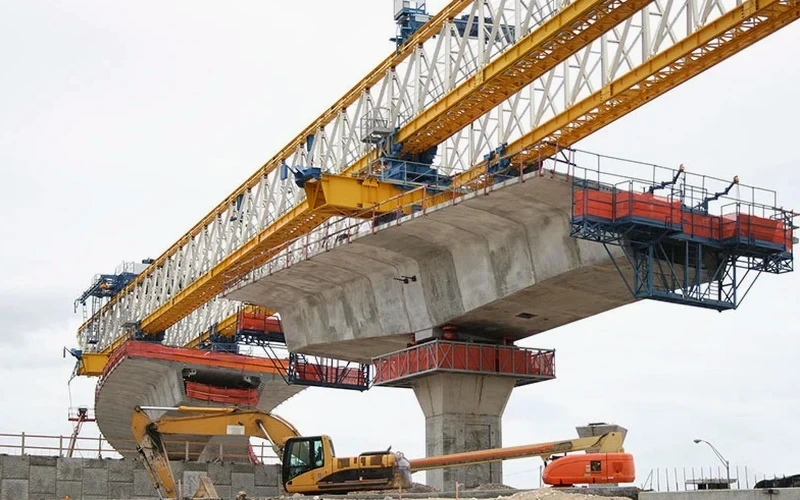
Technical reference image — Trenton New Jersey

Local ground factors

What we often see in the downtown Trenton corridor is a stubborn layer of desiccated crust over soft, high-plasticity clay. It looks stiff in a test pit, but it's hiding a much weaker material just a few feet down. A tunnel boring machine set up for stiff clay will struggle when it hits that underlying soft zone. The risk isn't just at the face. The deeper you go, the more you deal with the confined aquifer in the underlying sand. If the tunnel invert gets too close to that aquifer, basal heave becomes a real concern. Then there's the issue of old foundations and abandoned utilities. A thorough geotechnical analysis for soft soil tunnels flags these hazards early. We use the lab data to model the relaxation zone around the opening and recommend support pressures that account for the low effective stress in the saturated silts.

Need a geotechnical assessment?

Reply within 24h.

Email: info@geotechnicalengineering1.sbs

Typical values

ParameterTypical value
Undrained Shear Strength (Su)20 - 75 kPa (soft to firm clays)
Compression Index (Cc)0.25 - 0.55
Overconsolidation Ratio (OCR)1.0 - 2.5
Permeability (k)1x10⁻⁷ to 1x10⁻⁴ cm/s
Plasticity Index (PI)12 - 45%
Sensitivity (St)2 - 8
Standard Penetration Test N-value2 - 15 blows/foot (soft zones)

Complementary services

01

Advanced Laboratory Testing Program

We design a lab program specifically for the soft clays and silts common in the Trenton area. This includes constant-rate-of-strain consolidation, CU triaxial with pore pressure measurement, and index testing to ASTM standards. The data feeds directly into finite element models for tunnel face stability and ground movement predictions.

02

In-Situ Investigation and Face Stability Analysis

We combine CPTu soundings with mud rotary borings to map the soft soil pockets along the tunnel alignment. Our geotechnical analysis for soft soil tunnels calculates the required face pressure and evaluates the risk of blowout in the shallower sections near the Delaware River. We provide the target values for the TBM operator.

Regulatory framework

ASTM D1586 (Standard Penetration Test), ASTM D2487 (Soil Classification), ASTM D2435 (One-Dimensional Consolidation), ASTM D4767 (CU Triaxial Test), IBC Chapter 18 (Soils and Foundations), ASCE 7 (Minimum Design Loads)

Common questions

What is the typical cost range for a geotechnical analysis for a soft soil tunnel project in Trenton?

The budget depends heavily on the length of the tunnel and the number of borings required. For a preliminary investigation along a short alignment, projects typically start around US$4,280. A comprehensive design-phase program with multiple deep borings, advanced triaxial testing, and consolidation analysis can reach US$16,470. We scope the work to match the specific geological challenges of the Delaware River basin.

How do you handle the transition zones between soft soil and rock under Trenton?

We use continuous sampling and CPT soundings to pinpoint where the soft deposits end and the weathered shale begins. In the lab, we test both the soil and the rock core. The geotechnical analysis for soft soil tunnels then defines a mixed-face condition, and we provide separate strength and deformation parameters for each material so the design can account for the abrupt change in stiffness.

What laboratory tests are most critical for tunneling in the soft clays of the Delaware River area?

Consolidated-undrained triaxial tests are essential for getting the undrained shear strength profile. Oedometer tests are just as important to predict long-term settlement under the city's streets and buildings. We also run Atterberg limits and grain size analyses on every sample to build a consistent soil behavior profile for the geotechnical analysis for soft soil tunnels.
Location and service area

We serve projects in Trenton New Jersey and surrounding areas.

View larger map